
Met House Painters of Salt Lake City
- 650 S Main St, Salt Lake City, UT 84101
- Locally owned & operated — not a franchise
House Painters in Millcreek
Looking for house painters in Millcreek usually starts with a 1950s or 60s house that’s due. Millcreek grew fast after World War II, when returning veterans bought starter homes in Canyon Rim and Olympus Cove, and the brick ramblers and split-levels from that boom are now on their third or fourth repaint. The trim, soffits and fascia show it first.
Met House Painters is based downtown at 650 S Main St, a short drive southeast. We paint across Millcreek’s four community areas, from the valley floor near 3300 South up the bench to Olympus Cove, and we treat each house according to where it sits.
How our house painters in Millcreek approach a repaint
We start with a free consultation and a slow walk around the house. On a brick rambler, the paintable surfaces are the wood trim, soffits, fascia, garage door, porch and any siding added in a remodel, so we check each piece for chalking, open caulk joints and rot at the bottoms of boards.
The proposal lists repairs separately from paint. If a fascia board needs replacing, you’ll see it. Then the work: a wash to remove dust and the winter inversion film, scraping and sanding to a sound edge, priming bare wood, fresh caulk, and two coats of premium acrylic.
Split-levels add a wrinkle: the upper story is often sided while the lower is brick, so there’s more wall area and height on one end. We plan ladder work for that side. Our exterior painting page has product and timing details.
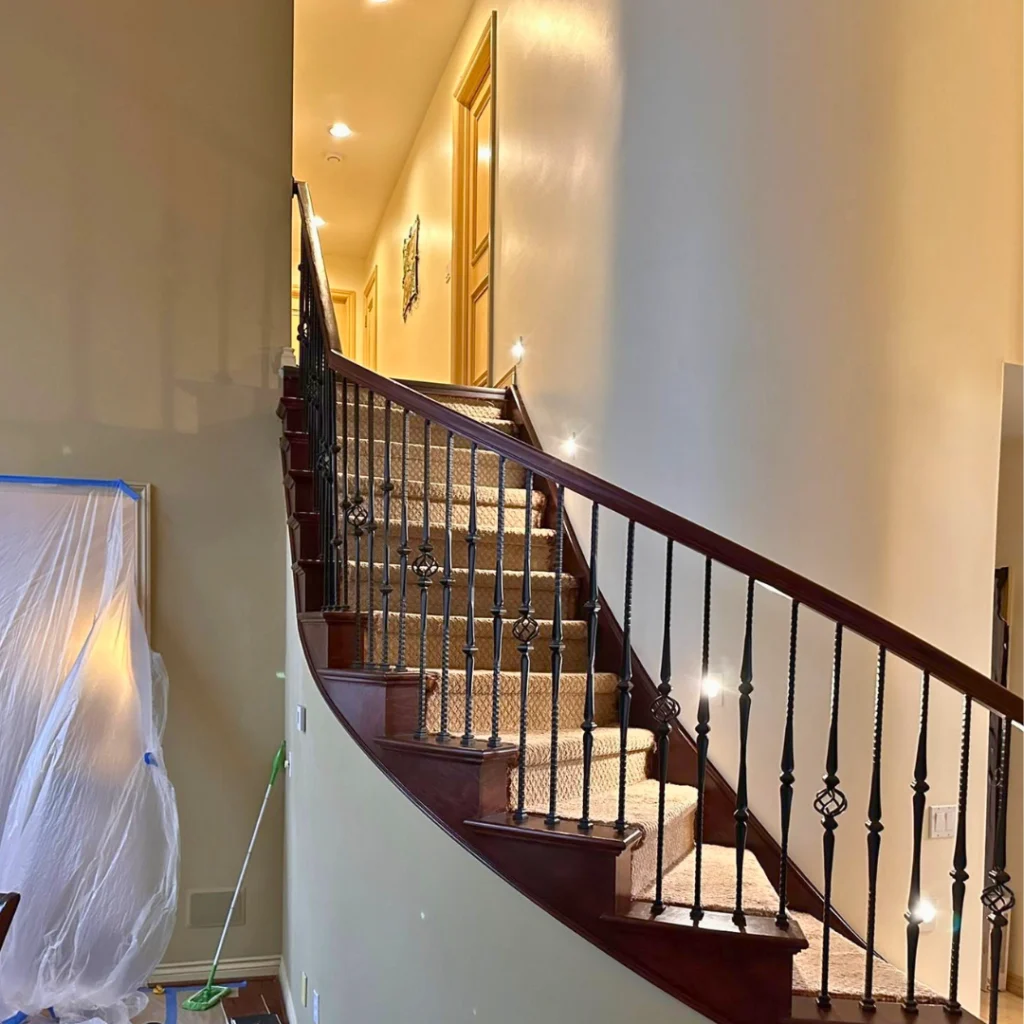
Ramblers, split-levels and mid-century homes
Millcreek’s housing was mostly built between the 1930s and 1960s and largely finished by the 1980s. The dominant stock is brick ramblers and split-levels on generous lots, with mid-century modern homes climbing the bench and 1970s and 80s two-stories higher up. Olympus Cove adds contemporary builds with big glass fronts, and the blocks near Brickyard now include townhomes and infill.
Materials follow the eras. Brick bodies with painted wood trim and soffits are the norm; remodels bring wood or fiber-cement siding; newer homes are often stucco. Early-1900s summer homes still stand along Evergreen Avenue, and those get the hand-brushed treatment we give any historic trim.
Inside, the same era means plaster or early drywall, original oak or birch cabinets and wood trim. Kitchens pair naturally with cabinet refinishing, and interiors run year-round when exteriors can’t.
Bench or valley floor: where the house sits changes the job
Millcreek’s floor sits around 4,285 feet, but Canyon Rim, East Millcreek and Olympus Cove climb well onto the east bench. Up there you get more UV, more snow load on eaves and fascia, and the canyon winds that spill out of Mill Creek and Parleys canyons. The payoff is that bench homes often sit above the worst of the winter inversion.
On the floor, the inversion leaves a particulate film on siding and trim that must be washed off before paint will bond. Everywhere, south and west walls take hard afternoon sun and fade first, while shaded north sides stay damp through freeze-thaw cycles.
We schedule exterior work in the dry May-to-October window and adjust by elevation; bench homes often start later in spring. Most homes here predate 1978, so lead-safe practices apply to original trim.
Thinking about a project in Millcreek? Get a clear, written proposal from a local crew.
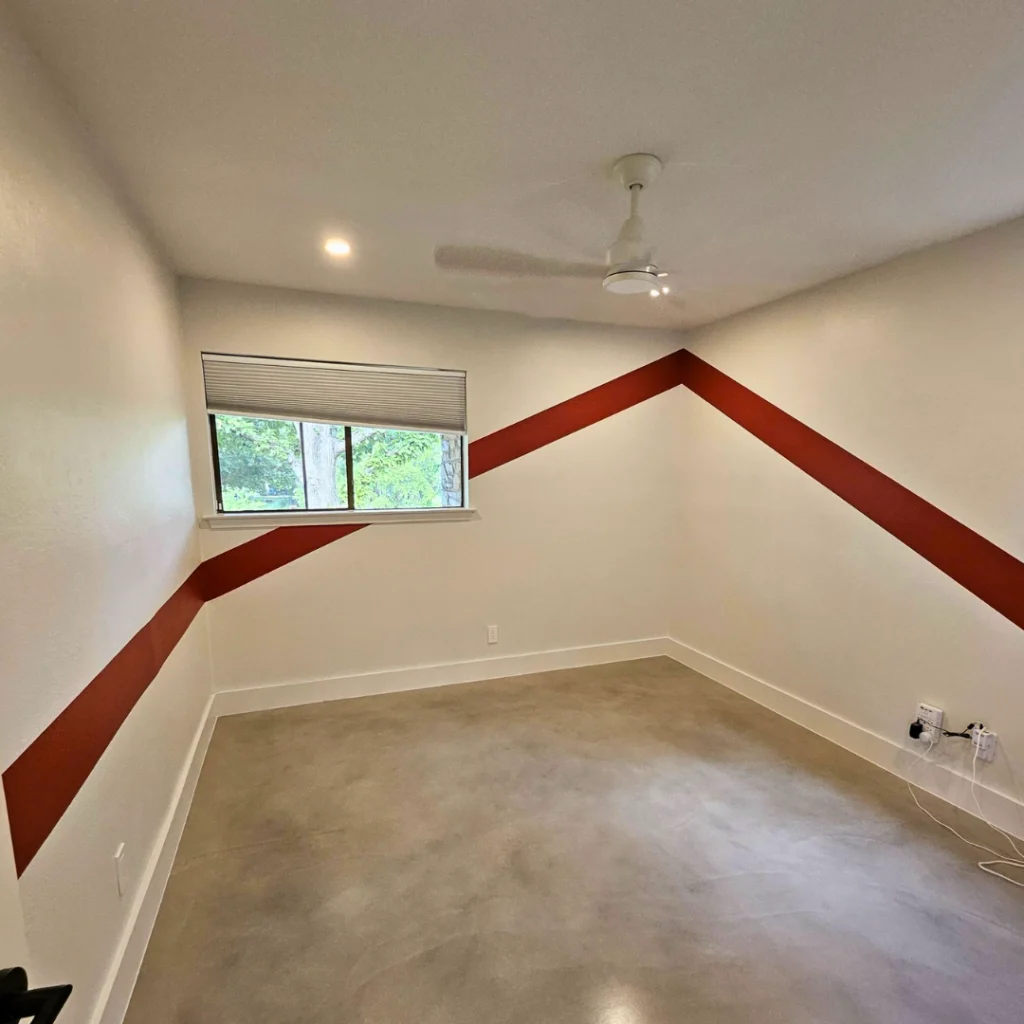
Why Millcreek homeowners choose Met House Painters
Met House Painters is locally owned and operated, not a franchise. Millcreek families who’ve hired us mention:
- We know mid-century houses. Chalky soffits, hardboard siding on split-levels, cedar on Olympus Cove moderns: each gets the right prep and primer.
- Honest carpentry line items. Rotted fascia and trim are priced as repairs, not buried in the paint number.
- Licensed and insured crews who protect mature landscaping and keep the site tidy.
- Lead-safe practices on pre-1978 trim.
- Close by. Downtown to Highland Drive is a short drive, so follow-ups are quick.
Our home painting page covers the service, and the Holladay and Sugar House pages cover the neighbors on either side.
A young city full of older homes
Millcreek only became a city at the end of 2016, after voters approved incorporation the year before. City Hall on Chambers Avenue and Millcreek Common, with its skating ribbon and climbing wall at Highland Drive, have given the area a center it didn’t have, and the Highland Drive and 3300 South corridor is filling in with restaurants and housing.
For homeowners, a straightforward repaint generally doesn’t involve the city; anything structural does, and we’ll tell you when a repair crosses that line. HOA color approval is mostly limited to townhome and condo communities near Brickyard and a few bench developments; the older single-family streets have none.
Remodeling on 1950s and 60s homes is constant here, and a repaint is often the final step. We’re happy to coordinate with your contractor.
Frequently asked questions
Should I paint the brick on my Millcreek rambler?
Usually not. Unpainted brick is durable and breathes; paint traps moisture and commits you to repainting it forever. We focus on the trim, soffits, fascia, doors and any siding.
What's different about painting a house in Olympus Cove or Canyon Rim?
Elevation. Bench homes see more UV, more snow and canyon winds, so we lean toward UV-stable premium acrylics, pay extra attention to eaves and fascia, and schedule a little later in spring.
Can you paint the hardboard or aluminum siding on my split-level?
Yes. Hardboard needs swollen bottom edges addressed, a good primer and sealed joints; aluminum needs the chalk washed off and a bonding primer before a satin acrylic.
Do you paint interiors in winter?
We do. Interior painting runs year-round, which suits homeowners who want exteriors done in the dry season and bedrooms, kitchens or basements done when the weather turns.
Do I need a permit from Millcreek City to repaint?
Routine repainting generally doesn’t require one. If the project involves structural repairs or exterior changes beyond paint, permits can come into play, and we’ll flag that during the consultation.
Also serving nearby neighborhoods
Ready to refresh your Millcreek home?
Call (385) 469-5010 or request a free consultation and we’ll come walk the house with you.