
Met House Painters of Salt Lake City
- 650 S Main St, Salt Lake City, UT 84101
- Locally owned & operated — not a franchise
Cabinet Refinishing in Salt Lake City
Cabinet refinishing in Salt Lake City is the fastest way to make a 1960s, 70s or 90s kitchen look new without tearing it out. Met House Painters degreases, sands, primes and sprays your existing doors, drawer fronts and boxes with a cabinet-grade enamel, usually in about a week, for a fraction of replacement cost.
We are locally owned and operated — not a franchise — based downtown at 650 S Main, and we refinish kitchens from Capitol Hill bungalows to Millcreek ramblers. Here is how the process works, what the finish is made of, and how to decide between refinishing, refacing and replacing.
Refinish, Reface or Replace? Typical Costs Compared
If the boxes are solid and the layout works, refinishing is almost always the value play.
- Refinishing (what we do): keep everything, change the finish. Professional refinishing typically runs about $2,000–$4,500; a fully sprayed kitchen with many doors or a two-tone scheme often lands in the $3,500–$8,000 range.
- Refacing: new doors and veneer over the old boxes, typically $4,300–$10,000, and it still has to be finished and matched.
- Replacement: new semi-custom cabinets commonly start well above $15,000 once demolition, countertops and plumbing are counted.
Refinishing typically costs one-third to one-half of replacement and skips the demo, the countertop risk and the weeks without a sink. It does not fix a bad layout or failing boxes, and we will say so if that is what we see.
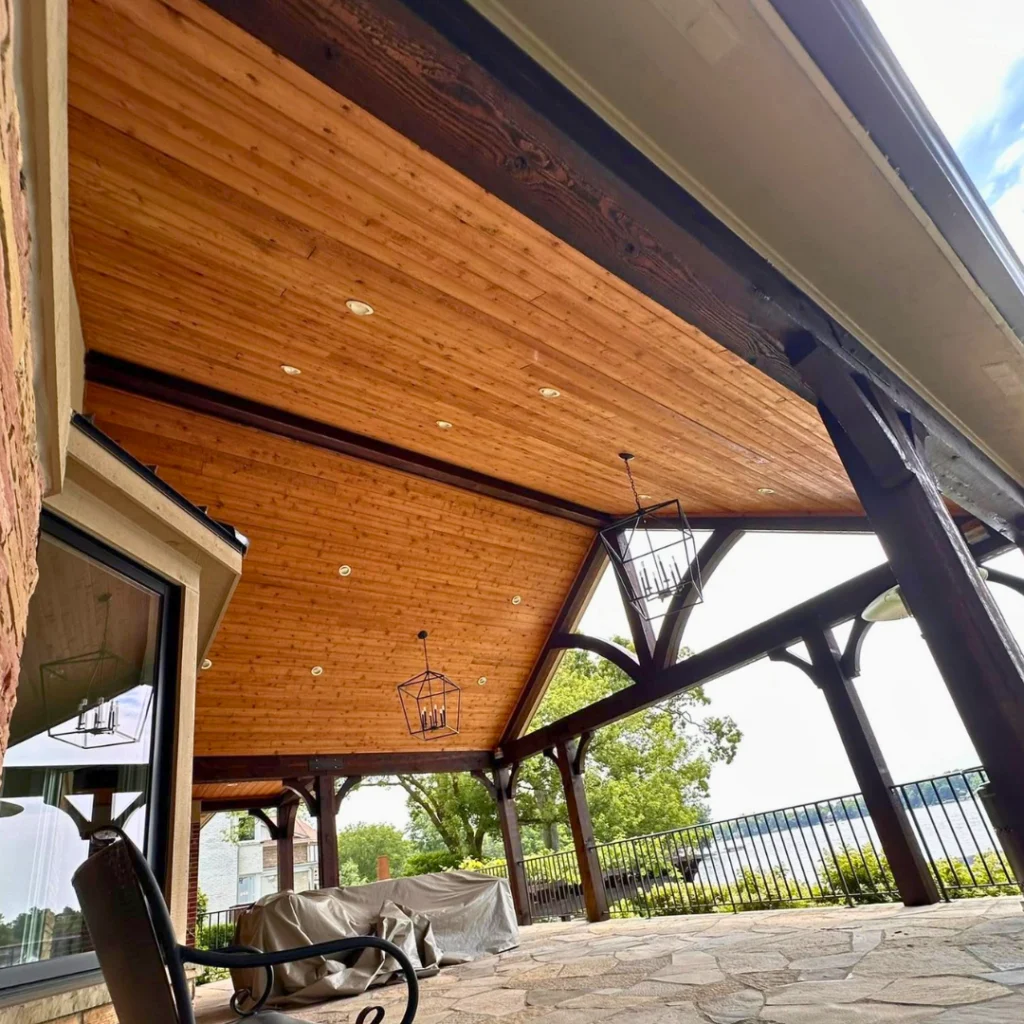
How We Refinish Cabinets: Degrease, Sand, Prime, Spray
- Remove and label. Doors, drawer fronts and hardware come off, and every piece is numbered so it goes back where it came from.
- Degrease. Kitchen grease is the number-one cause of peeling cabinet paint, so every surface is cleaned with a degreaser first.
- Scuff-sand and repair. 150–220 grit for adhesion, dings filled, grain filler if you want oak to read smooth.
- Bonding primer. Shellac-based or specialty bonding primer on slick laminate or thermofoil; stain-blocking bonding primer on wood.
- Spray two coats of enamel. Doors sprayed flat in a controlled booth; boxes sprayed in place behind full masking of counters, floors and appliances.
- Cure, reinstall, adjust. Hinges realigned, new hardware or soft-close hinges installed if you want them.
Cabinet-Grade Enamels and the 30-Day Cure
We do not use wall paint on cabinets. We spray waterborne cabinet enamels, urethane- or alkyd-modified formulas that level like oil, cure hard and resist blocking. They are low-VOC, typically under 50 grams per liter, so the kitchen stays livable while we work.
These enamels dry to the touch in a few hours and recoat the same or next day depending on the formula, but full hardness takes time. Expect gentle use for one to two weeks and full cure in roughly 30 days. Utah’s dry air helps; a cold garage slows cure, so we keep the spray space warm.
Properly prepped and sprayed, a refinished kitchen often gives a decade or more of service: mild soap, no abrasives, no wet towels hung on doors.
Thinking about a project in Salt Lake City? Get a clear, written proposal from a local crew.
Timeline and Kitchen Downtime
An average Salt Lake kitchen takes about a week: typically three to five working days on site, plus a few days of cure before doors go back on. Spraying doors off-site is what makes the schedule work; the boxes finish fast and the kitchen is never fully torn apart.
Empty the cabinets and clear the counters before we arrive. The sink, fridge and stove stay usable most days, with an afternoon or two when the boxes are wet and the room is off limits. We leave the kitchen clean each evening.
Winter is popular for cabinets because exteriors are shut down, so book early for January or February. Colors lean toward warm whites, muted sage, navy and deep green, often two-tone with lighter uppers and a darker island; we spray sample doors in your top choices to judge in your own light.
Why Salt Lake Homeowners Trust Met House Painters With Their Cabinets
- Spray finish, not brush marks. Doors are sprayed flat in a controlled environment for a factory-smooth result.
- Prep that prevents peeling. Degreasing and bonding primer on every job, no shortcuts on oak or laminate.
- Honest advice. If your boxes are failing or the layout is the real problem, we will say so.
- Licensed and insured, with a written scope and schedule.
- Experience with the valley’s cabinets, from original oak in Millcreek and Rose Park ramblers to Avenues built-ins.
See finished kitchens in our gallery, match your trim through our interior painting service, or fold cabinets into a whole-home project.
Frequently asked questions
Can you paint oak cabinets without the grain showing?
Yes, with grain filler applied before priming and sanded flush. It adds a step and some cost, and many homeowners like a hint of grain under a sprayed finish, so we show both on sample doors.
Will the finish chip?
A properly degreased, sanded, bonding-primed and sprayed cabinet enamel is far tougher than brushed wall paint and holds up to daily use for years. Most chipping we see traces back to skipped degreasing or wall paint used instead of a cabinet enamel.
Can you refinish laminate or thermofoil cabinets?
Usually, as long as the thermofoil is not peeling off the substrate. Slick surfaces get a specialty bonding primer that grips where ordinary primer would not. If laminate is lifting at the edges, we will say whether it can be re-glued or should be replaced first.
Do you refinish bathroom vanities, built-ins and mantels?
We do. Vanities, laundry cabinets, bookcases, window seats and mantels use the same degrease-sand-prime-spray process, and doing them with the kitchen is the most cost-effective way to get a consistent finish through the house.
My cabinets were painted decades ago. Is lead a concern?
On pre-1978 homes with older painted cabinets, we assume lead may be present and use lead-safe practices when sanding: containment, HEPA vacuuming and careful cleanup. It is a prep detail we handle and rarely changes the plan.
Also serving nearby neighborhoods
A new kitchen in about a week
Call (385) 469-5010 or request a free consultation and we will look at your cabinets, bring sample doors in your favorite colors, and give you a written proposal.